Many employees spend years trying to reach the management stage of their careers. They become good at the work they do, earn trust, help other people solve problems, and gradually take on more responsibility. When that promotion finally comes, or when they land a management-level job elsewhere, it feels like progress. But it can also place them in one of the most exposed positions in the company.
The new manager is no longer judged mainly by what they complete themselves. They are now responsible for whether other people complete their work, whether deadlines are met, whether clients remain satisfied, whether employees remain focused, and whether decisions from senior leadership can actually be carried out. Problems move toward them from both directions. Employees bring workload concerns, conflicts, and requests for help, while executives bring targets, staffing decisions, deadlines, and expectations the manager often has no part in shaping.
Those responsibilities do not come with equal authority. The manager may be responsible for results without controlling the budget, the number of employees available, the company’s priorities, or the major decisions shaping the work.
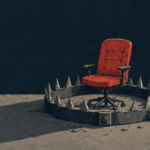
Over time, that imbalance can change what the promotion feels like. The employee moves away from the hands-on work that makes their contribution easy to see, without moving high enough to gain real control over the organization. If the business struggles and someone needs to be removed, the person in the middle can become one of the easiest people to justify cutting. That is the structural risk of middle management. The role can carry broad responsibility while remaining one of the easiest layers to describe as removable.
One Job, a Dozen Titles
Middle management is not one job title or one level of authority. It can include team leads, supervisors, project and program managers, operations managers, account managers, department heads, senior managers, and directors. Some supervise employees who perform the work directly, while others manage managers who then supervise those employees. What connects them is their position between the people making higher-level decisions and the people expected to carry those decisions out.
Beyond The Surface
The thing that is easiest to see is not always the best explanation for what is happening. Look beyond the surface. Consider what allowed it to develop, what keeps it in place, and what the surface explanation leaves out.
Their main job is to control how work moves through the organization. They turn broad direction into clear assignments, decide what needs to happen first, connect people whose work depends on one another, and make sure problems reach someone who can address them. They also carry information upward by explaining what employees can realistically complete, where delays are forming, and what support is missing.
In a well-organized company, middle managers run established processes. They know how work is assigned, reviewed, approved, and handled when something goes wrong. In a less organized company, they often manage the absence of process. They create workarounds, remember decisions that never get written down, fill communication gaps, and repeatedly turn vague instructions into something employees can use.
That coordination is real, productive work. Executives provide direction and authority, employees provide the skill and effort that complete the work, and middle managers create the process that allows those two sides to function together. But the difficulty begins when the manager remains responsible for that entire process while the staffing, deadlines, priorities, and other major decisions are controlled somewhere else.
Caught Between Decisions and Consequences
In practice, middle managers often spend their days trying to make demands from above fit the limits of the people below. A senior leader sets a target, reduces staff, shortens a deadline, or asks for more work. The manager then has to turn that decision into assignments, schedules, and conversations with the employees expected to carry it out.
The pressure also moves upward. Employees raise concerns about workload, missing information, weak planning, poor quality, or deadlines that cannot be met. Those concerns usually return to leadership through the same manager who delivers the original demand. The manager becomes responsible for explaining both sides to each other, even when neither side wants to hear the full answer.
“A middle manager’s best work often appears through conflicts that never escalate, deadlines that remain manageable, employees who stay coordinated, and bad decisions that cause less damage than they otherwise would.”
This can blur the difference between who made the decision and who has to deliver it. Employees often experience the manager as the person adding work, pushing a deadline, or denying a request because that is the person speaking to them. The instruction may come from higher up, but the manager becomes attached to it through repeated communication and enforcement. Senior leaders can also step around the manager and speak directly to employees, weakening the manager’s authority without removing responsibility for the result.
If the manager translates the pressure well, the work may continue without a major conflict, missed deadline, or client complaint. That success can look ordinary because the problem never becomes public. But if the translation fails, the unresolved workload, delay, or frustration ends up attached to the manager’s name.
Carrying More While Controlling Less
The turning point usually comes when the manager realizes how much the promotion changes the way their work is judged. They may now oversee dozens of assignments, deadlines, employee concerns, client problems, and decisions at the same time. Much of the day is spent in meetings, answering questions, adjusting plans, and resolving problems. That leaves little uninterrupted time to think through everything they are expected to control.
Reality Check
Moving into management can sometimes provide less protection than the promotion suggests. Individual contributors remain tied to the hands-on work the company needs completed, while executives remain tied to company direction, major decisions, and the authority to determine how the organization responds when cuts are needed. The middle manager carries broad responsibility without the same protection from either side. So when cuts need to be made, the organization may find it easier to justify dividing the management work among people above and below the role, whether or not that is the most effective way to handle the work.
Their contribution also becomes harder to point to. An employee doing the work directly can show what they build, repair, sell, process, or complete. A middle manager’s best work often appears through conflicts that never escalate, deadlines that remain manageable, employees who stay coordinated, and bad decisions that cause less damage than they otherwise would. If those efforts succeed, the work can look as though it needs little management. If they fail, the missed deadline, unhappy client, or struggling employee is connected to the manager.
At that point, advancement can begin to feel like exposure. The manager moves away from the work that makes a contribution easy to prove, while major decisions about staffing, budgets, deadlines, and company priorities still belong to people above them. They carry responsibility for many outcomes without controlling many of the conditions that produce them.
That imbalance becomes more dangerous when the business struggles. Employees who do the hands-on work remain necessary, since the work still has to be completed, and experienced employees often hold knowledge the company cannot easily replace. Executives keep their place because they still decide how the company responds. But the middle manager has less obvious protection. Their duties can appear easier to divide among the people who remain, which can make the role easier to remove even when the work itself is still necessary.
The manager may then realize they are carrying more, controlling less, and becoming harder for the organization to defend. And that vulnerability is larger than any one job or company. It comes from a repeatable way that organizations assign, observe, and redistribute management work.
The Middle-Management Visibility Trap
A middle manager’s position becomes vulnerable because success and failure are seen in very different ways. If things go well, employees stay coordinated, problems are handled early, and work continues without much disruption. The company sees stability, but it may not see how much of that stability comes from management. If things go badly, the missed deadline, unhappy client, struggling employee, or failed handoff is much easier to connect to the manager.
If the company then faces financial pressure or decides to simplify its structure, middle management can become one of the first layers considered for removal. The role appears easier to divide than the work employees do directly, or the authority executives hold. Supervision can move to another manager, planning can move upward, and coordination can be handed to experienced employees.
“If the business struggles and someone needs to be removed, the person in the middle can become one of the easiest people to justify cutting.”
When that position disappears, the work usually follows one of two paths. In one, senior employees and lower-level leaders absorb the extra duties while keeping their original jobs. Eventually, the “temporary coverage” becomes the new baseline for their roles. Workloads increase, sometimes causing people to burn out, important tasks to slip, or the organization to accept a lower level of support.
In the other path, one of the people carrying the extra responsibility proves capable of handling it. That person may eventually receive a management title, or begin functioning as a manager without one. They then enter the same structure as the person before them, with broader responsibility, less direct output, and limited control over the decisions shaping their results.
So the middle-management visibility trap can reproduce itself. A company removes a manager, spreads the work across the people who remain, and eventually creates another manager from the employees who absorb it most successfully.
A Crossroads, Not a Destination
For the employee trying to move into management, the promotion may look like the next clear step. It usually brings more responsibility, more recognition, and the hope of greater influence. But the employee also moves away from the direct work that proves their contribution before they gain any real control over the company’s decisions.
What to Remember
- Middle managers sit between executives and hands-on employees, turning higher-level decisions into workable plans while carrying employee concerns and limits back upward.
- A middle manager can be responsible for staffing, deadlines, clients, and employee outcomes without controlling many of the decisions that shape those results.
- When a company needs to cut costs or simplify its structure, middle-management duties can appear easier to divide among executives, other managers, and experienced employees than the work or authority held by the layers around them.
- When management work is redistributed, the people who absorb it may carry those duties permanently, and some may eventually move into middle management and enter the same vulnerable cycle.
For the new manager, that trade often becomes clear through exhaustion. Their work days fill with meetings, questions, conflicts, shifting priorities, and problems created by decisions made elsewhere. They may feel involved in everything and accomplished in nothing, even though keeping other people moving is now the work.
The experienced middle manager can face an even harder realization. They may be too far removed from their old specialty to return easily to a senior role doing hands-on work, while still lacking the authority, security, and decision-making power of an executive. They become responsible for more than ever, while owning less of what the company considers impossible to lose.
That position can distort how people judge themselves. A manager may start to believe they are failing because they cannot protect employees, satisfy leadership, meet every deadline, and resolve every conflict at once. The role may place one person inside demands that cannot all be satisfied.
So middle management becomes less of a destination than a career crossroads. The person in the middle may eventually need to move higher, return closer to direct work, or find an organization that recognizes the work of managing people, processes, projects, and competing priorities as necessary to how the business operates.
The Work Still Has to Go Somewhere
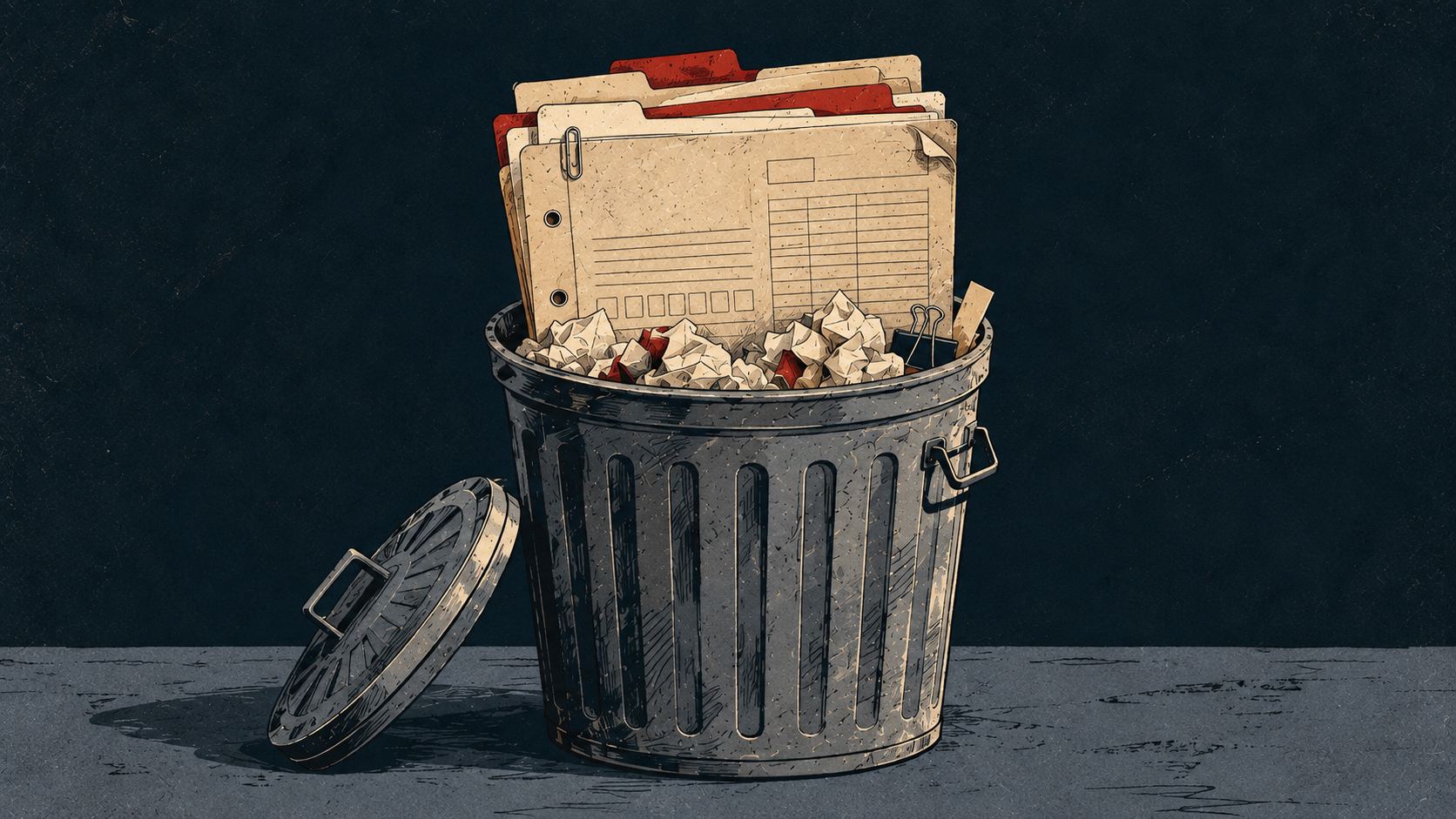
When a middle manager is removed, the position disappears, but the work remains. Someone still has to set priorities, coordinate people, explain decisions, resolve conflicts, develop employees, track progress, and notice when plans are starting to fail. Those responsibilities move upward to executives, downward to the employees doing the hands-on work, or sideways to other managers. Some tasks may simply stop being done.
And that is what makes the role look disposable. Its duties can be assigned to several people, allowing the company to say that every task is covered. But what disappears is the person who holds the full picture and understands how those tasks affect one another. The work gets redistributed, while the combined ability does not necessarily get replaced.
But the experience of middle management also depends heavily on the organization. Companies that treat planning, coordination, people management and employee development as necessary work are more likely to give their managers clear authority and defined responsibilities, while companies that rely on informal decisions, constant workarounds, and managers filling every gap are more likely to treat the same role as overhead. Size can influence this, but the stronger question is whether the company recognizes this type of management as “real” or important work.
So an employee who feels trapped in the middle may still be in the right career. They just may be working for an organization that depends on management while refusing to value it properly.