
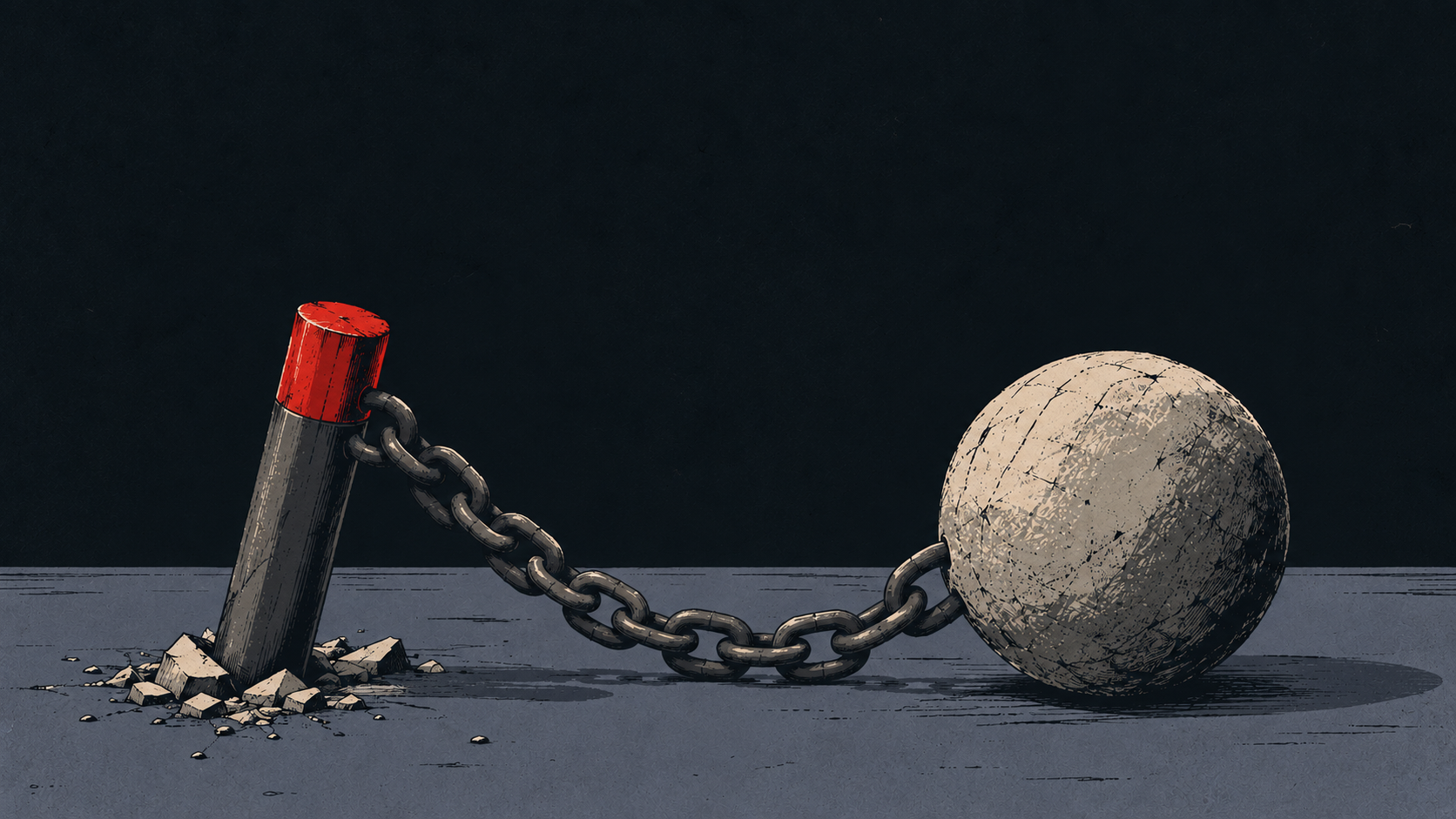
A manager is handed a number, a deadline, a team, or a problem and told to own the result. The assignment may involve launching a product, improving an employee, fixing a process, protecting a client relationship, increasing revenue, or raising the amount of employee time billed to customers. Whatever form it takes, the expectation is clear. Their performance is judged by what happens next.
Then the conditions begin to move. A senior leader changes the priority, or another department delays a decision the plan depends on. Sales makes a promise to a customer without consulting the people expected to deliver it. A key employee gets reassigned, or a respected colleague persuades the team to follow a different approach. The original target stays in place while the manager is left to rebuild the plan around choices made elsewhere.
The role still looks powerful from the outside. In practice, the manager runs meetings, assigns work, reviews progress, handles difficult conversations, and explains the outcome. That visibility creates the appearance of control. But it also makes the manager the person everyone turns to when the work starts slipping, even when the strongest decisions remain outside the role.
The burden grows quickly. The manager must protect a deadline after losing staff, improve performance without controlling the people involved, or hit a financial target created by leaders who control pricing, hiring, sales, and spending. They are expected to make incompatible demands fit together and to keep the strain from spreading to the team, the client, or the work itself.
The Conditions Behind Credible Ownership
Accountability can work even when authority is shared. Every manager depends on clients, coworkers, senior leaders, and departments they cannot directly command. And even executives operate within limits set by owners, boards, markets, laws, and available money.
Beyond The Surface
The thing that is easiest to see is not always the best explanation for what is happening. Look beyond the surface. Consider what allowed it to develop, what keeps it in place, and what the surface explanation leaves out.
That dependence does not weaken the role on its own. To understand where the difficulty begins, three closely related ideas need to be separated. Responsibility describes the work placed in someone’s hands. Accountability determines which results will be used to judge them. Authority is what allows them to shape those results by making decisions, accessing information, directing resources, protecting priorities, and changing conditions when the original plan no longer holds.
Those elements rarely match perfectly. But in a well-designed role, they should remain close enough for the person to respond when conditions change. A people manager responsible for employee performance needs meaningful influence over hiring, workload, development, and discipline. A product leader responsible for customer results needs some control over what gets built and when. A department head responsible for profit needs authority over at least some of the pricing, staffing, spending, and work that produce it.
A properly structured role also makes those limits clear. The manager knows which decisions belong to them, which require approval, and who must resolve conflicts beyond their level. That clarity matters when pressure rises. It allows the manager to tell the team what will hold, what may change, and which commitments are still real. The manager may not control every condition, but they have enough authority to exercise judgment, respond to change, and make the accountability attached to the role legitimate.
Control Splits Across Three Areas
The gap becomes easier to see once accountability splits into three areas. The first is responsibility for the work. A project leader may receive a deadline after decisions about what the work includes, its price, its staffing, and customer expectations have already been settled. A product manager may be judged by customer use while sales, executives, engineers, and major customers can still change what gets built. A process owner may be expected to create consistency while powerful employees remain free to ignore the process.
The second is responsibility for people. A manager may be judged by an employee’s output while another leader controls the hiring decision, delays action on repeated problems, redirects the employee’s priorities, or protects them from consequences. The manager coaches, documents, explains, and repairs the effect on the team. They may spend weeks trying to stabilize a situation they are never allowed to resolve.
The third is responsibility for business results. A middle manager may be told to own revenue without controlling sales. An employee may be judged by how many hours get billed to customers, without controlling whether enough customer work is sold to fill that time. A department leader may be held responsible for profit while executives retain control over pricing, contracts, staffing, pay, and investment. A manager may also be judged by how much of the team’s time can be charged to customers, even though hiring levels and available client work are determined above them.
“The manager knows the outcome cannot be secured through good management alone, yet the expectation remains personal.”
These assignments create a particular kind of pressure. The manager can see the number, report the number, explain the number, and be judged by the number. But they may have very little power to change the forces producing it.
And formal authority is only one source of power. Rank, expertise, reputation, popularity, relationships, persuasive ability, and access to senior leaders can all determine whose direction people follow. Someone beside or below the manager may lack official control and still possess enough influence to reopen decisions, redirect work, or weaken agreed standards. The organization chart names one owner, but daily behavior may reveal several.
The Limits Become Clear
These conflicts can often seem manageable at first. A priority gets clarified, a staffing gap gets flagged to someone who can fix it, or a delayed approval reaches a person with the power to resolve it. The manager keeps working, trusting that careful planning, clear communication, and raising the issue to someone with more authority will restore the role to its original promise.
Reality Check
When organizations keep expectations fixed even as conditions change, managers often compensate by pushing harder on the people and work they can still influence. What looks like a manager becoming more demanding may actually be the pressure of unresolved decisions moving downward through the organization.
The turning point comes after those steps have been taken and the condition remains. The concern is documented, the consequence explained, and the right people already know. Another leader still changes the plan, a department still refuses the work, an influential employee still follows different instructions, or a financial target stays fixed after the resources needed to reach it have been removed.
The manager then understands what the assignment actually requires. They are expected to answer for a deadline controlled by someone else’s approval. They must protect a relationship while defending decisions they do not make, improve performance without the power to change staffing, workload, or consequences, and produce revenue without controlling sales, pricing, or demand.
That realization changes the emotional weight of the role. The manager knows the outcome cannot be secured through good management alone, yet the expectation remains personal. Delays still need an explanation, exceptions still have to be absorbed into the plan, and every frustrated employee or client still turns toward the person whose name sits closest to the work.
The Pattern Takes Hold
Accountability without authority follows a recognizable sequence. First, an outcome is assigned to a person. It may involve a project, a team, a product, a process, a customer, or a financial target. Second, the person receives enough authority to coordinate the work. They can schedule meetings, assign tasks, track progress, communicate expectations, recommend action, and report problems.
Third, the strongest decisions remain elsewhere. Another person controls the budget, staffing, what the work includes, deadlines, pricing, hiring, approvals, or priorities. Informal power may also outweigh the manager’s direction through expertise, relationships, reputation, or access. Fourth, one of those decisions changes the conditions behind the target. The manager explains the effect and asks for resolution.
“Someone beside or below the manager may lack official control and still possess enough influence to reopen decisions, redirect work, or weaken agreed standards.”
Fifth, the organization leaves the expectation in place. No binding decision restores the manager’s control, revises the target, or transfers ownership of the consequence. The manager continues coordinating because the work still needs somewhere to go. Follow-up becomes more frequent, and private negotiation replaces clear decisions. As a result, the people under the manager’s direct supervision face greater pressure because their work is one of the few remaining areas the manager can still influence directly.
And this is where the role starts to wear people down. The manager is still expected to sound certain while the plan becomes less stable. They must keep others focused while knowing the next override may undo the work again. They absorb frustration from above, below, and beside them, then return to the same target as though nothing fundamental has changed.
This pattern can begin before the role has even started, when a manager inherits commitments created without their involvement. It can also exist from the outset, with control already divided across departments, or develop gradually as meetings, direct reports, approvals, or customer relationships move elsewhere while the manager’s title remains unchanged. But even after that authority has been divided or reduced, attention still turns to the manager when the outcome falls short. The decisions shaping the outcome remain spread across several people, while the manager is still held accountable for the result.
Recognizing the Pattern
The pattern changes shape across roles, but the same questions expose it. A project lead may coordinate several teams whose employees report to other managers. The assignment becomes unstable when another senior leader decides which employee’s work takes priority.
What to Remember
- Accountability is credible when the person judged for an outcome has enough authority to shape the decisions, resources, priorities, and tradeoffs that produce it.
- A manager can be responsible for work, people, or business results while key decisions remain with executives, other departments, or influential colleagues, leaving the manager exposed to outcomes they cannot fully control.
- When another leader changes the plan, removes resources, or overrides a recommendation, responsibility for the resulting risk should remain attached to that decision rather than shifting entirely to the manager carrying it out.
A sales manager may own a target while product quality, pricing, marketing, staffing, and market demand sit elsewhere. The number measures the combined business, but the evaluation treats it as the manager’s individual result.
A quality, security, compliance, or safety leader may identify a serious risk without the authority to delay a launch, require repairs, or block unfinished work. Their role allows them to warn the organization while another person decides whether the warning changes anything. The strain comes from being expected to prevent a failure after the decision to accept the risk has already moved beyond them.
A manager responsible for introducing a new process may lack control over training time, workload, incentives, and executive participation. Communication can explain the change, but it cannot make senior leaders model it or make departments treat it as a priority. The manager may then be blamed when the new process fails to catch on, especially while employees keep receiving stronger signals from the old system.
Even well-structured management involves dependence on others. But accountability without authority appears when those dependencies can repeatedly change the outcome while responsibility remains fixed on one person.
Accountability Follows Authority
Participation in an outcome does not create equal accountability for it. A manager can own carrying out a plan without becoming responsible for every condition imposed on that plan. An employee can contribute to revenue without owning the company’s sales system. A department leader can manage spending without becoming the sole owner of profit created by pricing, staffing, investment, and executive decisions across the business.
When authority is divided, accountability must also be divided and made visible. The person who sets the target remains responsible for whether it is credible. The person who removes a resource owns the effect of that choice. The leader who overrides a recommendation remains connected to the resulting risk. The manager carrying out the decision should not become its apparent creator simply because they are closest to the work.
Legitimate accountability requires the real power to make decisions, access to the information and resources needed to act on them, and a way to resolve conflicts that go beyond the role. And it requires enough honesty to admit when an outcome belongs to several people and cannot fairly be placed on one person’s shoulders. Without those conditions, ownership becomes a demand to answer for other people’s power.