A client can hear a completely reasonable explanation and still leave the conversation unsure whether they are getting the whole truth. The agency understands the system, knows the technical language, and controls the history of what gets built, changed, or left unfinished. The client hires that agency because the organization lacks the specialized expertise, experience, and technical ability to do the work itself. The same capability that creates confidence at the beginning can later make the agency’s explanation almost impossible to challenge.
More hours get described as necessary maintenance, newly discovered complexity, additional development, or work that only becomes clear once the team looks deeper. Each explanation can sound responsible on its own. In practice, though, the client may still be paying for a weak first attempt, poor supervision, or a mistake the agency does not want to identify as its own. The charge arrives under a cleaner name, while the client is left trying to judge work they cannot inspect and explanations they cannot independently verify.
That uncertainty creates its own pressure. Refusing the work may delay the project or leave an important system unstable. Approving it may mean paying the same company to fix a problem that company helps create. The client still needs the agency’s expertise, but now has to wonder whether that expertise is being used to solve the problem or to control how it gets explained.
Assigning Responsibility for the Cost
A fair agency relationship depends on clearly dividing responsibility when the work changes or something fails. Here, agency refers broadly to any outside company a client hires for specialized work, including firms that may be called vendors, consultancies, contractors, development partners, or service providers. Clients hire them for judgment, experience, technical ability, and the expectation that those strengths will produce an agreed result.
Beyond The Surface
The thing that is easiest to see is not always the best explanation for what is happening. Look beyond the surface. Consider what allowed it to develop, what keeps it in place, and what the surface explanation leaves out.
Clients should pay when they ask for more, introduce new requirements, change direction, request additional revisions, or delay decisions in ways that create more work. Updated legal requirements, changes to outside platforms, and technical conditions that no one could reasonably have found earlier may also justify more time and money. In those cases, the agency should explain what has changed, why the added effort is necessary, and what the client will receive in return.
Work the agency creates through its own mistakes belongs in a different category. Poor supervision, missing documentation, weak technical decisions, inadequate quality checks, and work that has to be redone because of earlier mistakes should not automatically become another client expense. A responsible agency may cover the cost itself, split it with the client, or clearly identify the work as a fix for its own mistake, not new work the client should pay for.
The Mistake Comes Back as More Work
When an agency chooses not to identify its own mistake honestly, the resulting work can be presented as ordinary maintenance, support, investigation, or new development. The labor may be real and necessary. But what disappears is the agency decision that creates the need for it.
A shortcut in the original work can require repair later. Poor documentation can force the team to investigate its own earlier decisions, and repeated staffing changes can erase knowledge that then has to be rebuilt before the project moves forward. By the time these problems reach the client, they appear as tasks that must now be completed, stripped of the earlier choices that make them necessary.
“An agency that never admits uncertainty, never accepts responsibility, and always has a polished reason for why the client must pay can begin to sound rehearsed rather than honest.”
The agency controls how those tasks are described and usually proposes the remedy. The client sees the estimate, and the risk of refusing, but may not see the decisions behind them. More money gets approved because the work now has to be done, even when doing it adds little beyond what the client believes it has already paid for.
A less honorable agency can use this imbalance more deliberately. It may win the work with a price that is easier to approve, then deliver below-standard work that functions well enough for the client to begin using. Once the client has invested money, trained employees, and built daily work around it, weaknesses can return as repairs, improvements, or a larger rebuild. By then, the client may feel trapped between paying again and risking even more disruption. The agency gains another source of paid work from a condition it helps create.
Uncertainty About What to Believe
A mistake in finished work becomes an issue of fair treatment when the agency knows, or should reasonably know, that its own choices contribute to the extra work, and it still places the full cost on the client without clearly saying so. The client may accept mistakes and unexpected complications as part of difficult work. But the relationship changes when the agency stops separating legitimate new work from the cost of fixing its own decisions.
Reality Check
When an agency says a problem requires paid work beyond what the client already expected, the client often has to rely on that agency’s expertise to understand why the additional work is necessary. Because the client usually lacks the same technical expertise, it can be difficult to independently determine whether the added work is justified and who should be responsible for the cost. As a result, the client has to rely not only on the agency’s expertise, but also on its honesty about whether its own decisions contributed to the added cost.
This is where the client begins questioning more than the quality of the work. The client starts wondering whether the agency’s advice is meant to protect the project, protect the agency from blame, or create another paid assignment. A recommendation that would otherwise sound helpful now carries another possibility.
That uncertainty is difficult to resolve because suspicion is not proof. The client may feel that something is off and still lack enough information to explain exactly what. Approving more work can feel like being taken advantage of. Refusing may create delay, instability, or the expense of bringing in a new service provider. Either decision carries risk, and the client has to decide based on information from the very company whose role is now in question.
A Cycle That Rewards Weak Work
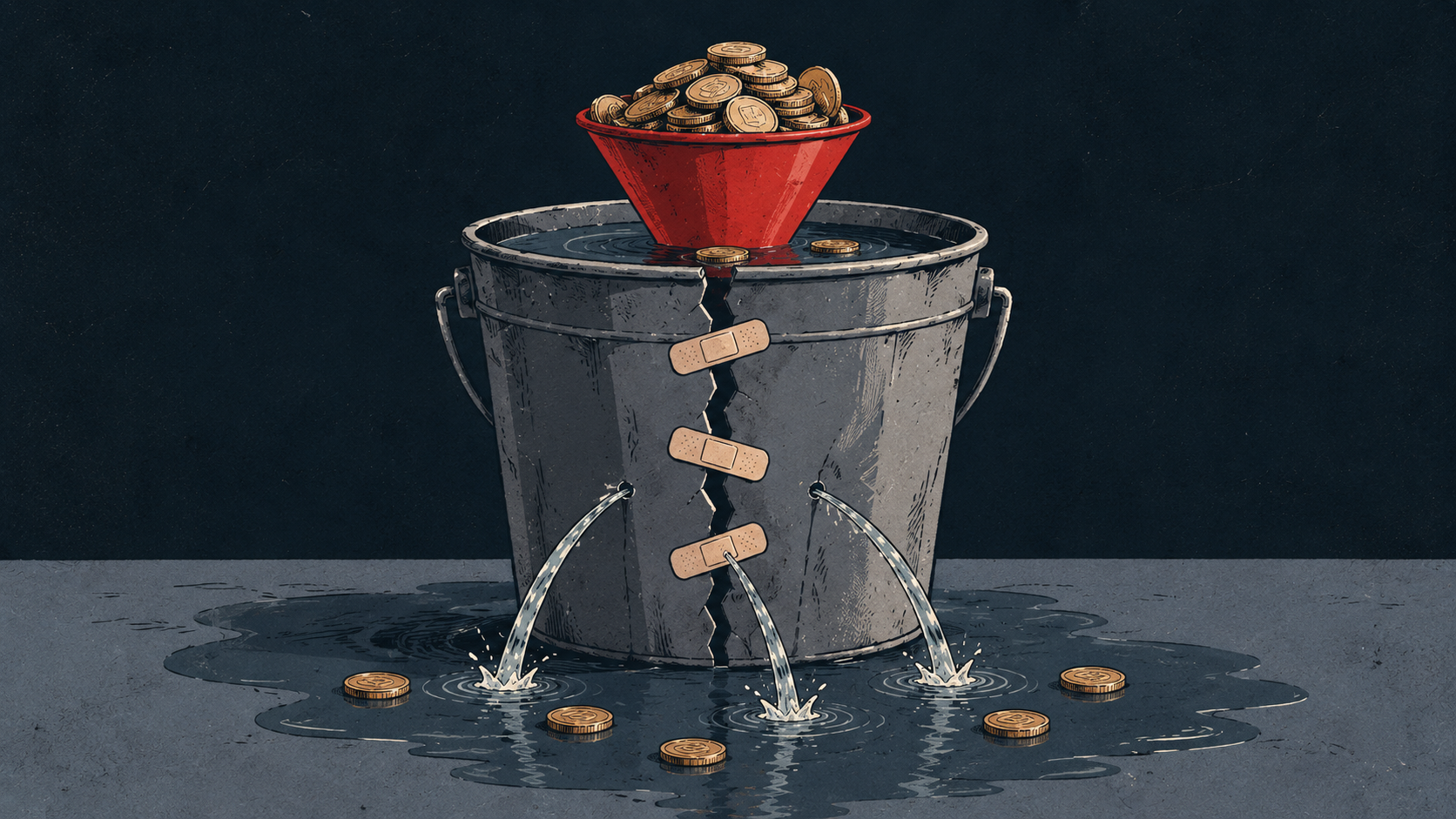
What emerges is a clear pattern. The agency controls or influences the decisions that create more work, while the client ends up paying for the results. And that imbalance can create a harmful cycle. An agency may learn that it does not have to do its best work the first time. It only has to produce something the client will accept and begin using. Weaknesses can then be addressed later through more investigation, repair, improvement, or rebuilding.
“The client may feel that something is off and still lack enough information to explain exactly what.”
Within this cycle, the better the agency performs, the less the client may need to spend fixing its work. The weaker the work is, the more paid demand that weakness can create. This does not prove that agencies intentionally make mistakes. But it does explain why preventing problems may receive less attention than fixing them once they appear.
For the client, that creates a deeply frustrating possibility. The agency may end up costing more precisely because its work needs more fixing, and the client has no simple way to prove that more care at the start would prevent the expense.
Recognizing the Pattern
The client can begin recognizing the pattern by asking what the additional charge is paying for. Is the agency creating something new, or is the client paying again to make the original work usable? New requirements, client changes, ordinary maintenance, and genuinely unexpected problems can justify more cost. Concern grows when the added work leads back to decisions the agency controls.
What to Remember
- Additional costs are legitimate when the client asks for more, requirements change, or genuinely unexpected conditions create work beyond the original agreement.
- When extra work comes from decisions the agency controls, charging the client without clear disclosure shifts the cost of the agency’s mistake onto the client.
- In agency relationships where clients are billed for agency time, fixing weak work can create more billable hours and more revenue than preventing the weakness in the first place.
- A client’s trust may decline when every setback has a convenient explanation, responsibility never seems to reach the agency, and the client keeps paying while wondering whether the explanation is complete.
The explanation also deserves attention. One reasonable explanation may be completely legitimate. A pattern becomes harder to dismiss when every delay, mistake, cost increase, or weak result comes with a convenient reason that explains it away, while the client keeps paying more.
Real work includes uncertainty, misjudgments, and mistakes. An agency acting honestly should sometimes be able to admit to underestimating the work, making the wrong decision, missing something important, or contributing to the problem. An agency that never admits uncertainty, never accepts responsibility, and always has a polished reason for why the client must pay can begin to sound rehearsed rather than honest.
That is often what makes the situation so exhausting. The client may not catch the agency in an obvious lie. Instead, the client only sees a repeating pattern in which every explanation sounds plausible, every outcome creates more work, and every cost seems to land in the same place.
The final question is why the client remains. The agency may still be earning trust through strong service, or leaving may have become too expensive, disruptive, and difficult. The answer helps reveal whether the client is continuing a healthy partnership or trying to manage a problem it cannot easily escape.
The Line Between Partnership and Dependence
Agencies make mistakes, and fixing them can require real labor. But needing that labor does not automatically decide who should pay for it. A contract may permit more hours, another phase, or another invoice, but having permission to charge does not fully answer whether the client is being treated fairly.
Trust can survive difficult work when the agency explains the situation honestly, separates new work from the cost of fixing its own decisions, and accepts a reasonable share of responsibility. That honesty gives the client a reason to keep believing in the relationship. Without it, the client stops spending money to improve the work and starts spending it to keep existing problems from getting worse.
When an agency repeatedly fixes its own mistakes without being honest with the client about it, the purpose of the relationship changes. The agency remains necessary because it holds the knowledge, access, and technical ability, while the client keeps funding work connected to conditions the agency helps create. What begins as a partnership becomes dependence, and every new recommendation must be weighed against the possibility that the agency is benefiting from work that should not be necessary.
That is what makes the pattern so damaging. The client is no longer only managing cost or fixing work. The client is managing doubt about the company it still has to rely on. A mistake does not have to destroy trust. But asking the client to keep paying the same agency because of that mistake eventually can.