
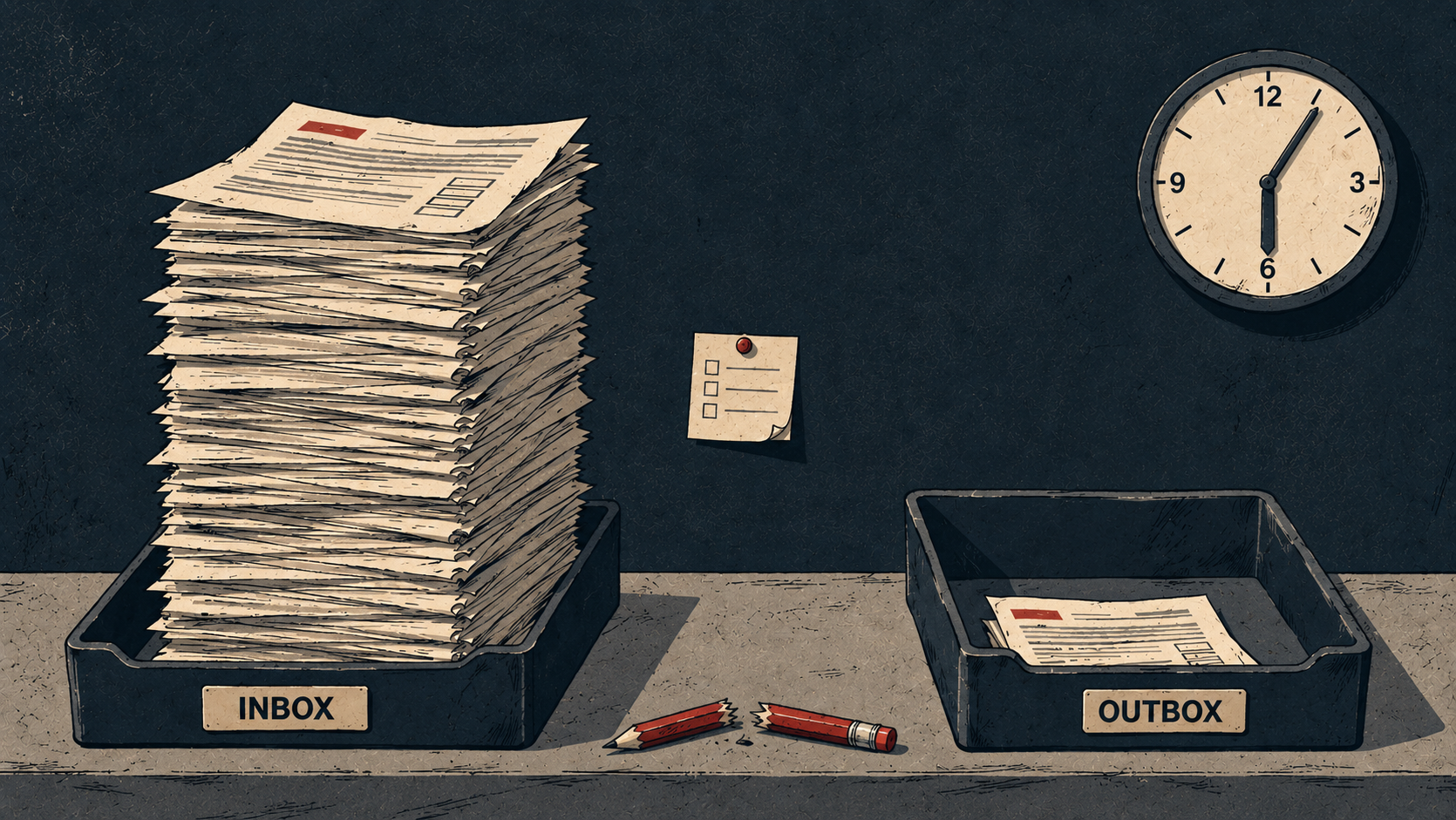
At first, being trusted with more work can look like progress. A reliable person gets pulled into larger problems, broader conversations, and responsibilities once spread across several people. The change may arrive through a promotion, a new title, or a simple assumption that the person who already keeps things moving can keep even more moving now.
That kind of trust can feel reasonable because it usually begins with competence. Someone understands the clients, knows where the work stands, can explain the risks, and can calm down messy situations without turning every problem into a crisis. The organization learns to depend on that steadiness, and over time, the person becomes the place where unfinished decisions, unclear ownership, staffing gaps, and rising expectations all meet.
The problem is not hard work itself. Most serious roles carry real pressure, and most capable people expect their responsibility to grow as they prove themselves. Trouble starts when new responsibility gets added without enough of the old responsibility being removed. What looks like efficiency from a distance may really be dependency forming around one person’s ability to absorb more than the role is designed to hold.
That is where “doing more with less” starts to become misleading. The work has not disappeared, and the pressure has not been solved; it has simply moved into a person whose reliability makes the structure look stronger than it actually is.
The Reasonable Version of the Role
In a healthy version of this setup, expanded responsibility should create clearer control over the work, not simply add more work to the same person. A hands-on project role may grow into a team leadership role, but that growth should come with a change in shape: fewer day-to-day assignments, clearer authority to make decisions, and enough room to guide other people instead of carrying every problem directly.
Beyond The Surface
The thing that is easiest to see is not always the best explanation for what is happening. Look beyond the surface. Consider what allowed it to develop, what keeps it in place, and what the surface explanation leaves out.
The reasonable version is easy to understand. One person may help clients understand what is happening, help the team decide who has time to do which work, review reports that show whether projects are on track, and coach newer team members through difficult situations. That same person may also help estimate future work before it is sold, or watch whether the company has enough paid client work to support the team. None of those responsibilities are strange by themselves.
They only make sense together if the role has space to hold them. Leadership work requires time to think, compare options, notice risks, and help other people solve problems before those problems become emergencies. If the role is meant to improve how work moves through the organization, it cannot also remain fully trapped inside every old responsibility that makes improvement necessary in the first place.
When the Title Gets Bigger Than the Role
In practice, this kind of expansion tends to start as a sequence of ordinary events that never quite gets undone. A person is promoted for doing good work, and the company has not yet hired anyone to take over what they used to do. So they keep covering the old role through what is supposed to be a short transition, until priorities shift, budgets tighten, hiring slows, or the replacement simply never arrives, and the temporary work becomes the job.
The same outcome may also show up through other doors. colleague leaves and the work gets split among whoever already understands it, a reorganization folds two roles into one without saying so plainly, a hiring freeze lands right after a role has already grown, a manager frames the added work as a stretch opportunity that quietly becomes the new baseline, or a department or client relationship grows faster than the staffing around it. None of these moments look like a crisis on their own, which is part of why the accumulation is so easy to miss until the role has already changed shape.
“The more the role expands without a matching reduction somewhere else, the more the person becomes the bridge between problems that the structure itself should be handling.”
However, the expanded role does not always create more control over the work. Rather, it can concentrate more pressure inside the same person. The person may be responsible for helping a team improve while still carrying a large group of client relationships, daily coordination, and the routine problem-solving that already fills the original role.
That creates a difficult kind of overlap, because the work being improved is still being carried by the person expected to improve it. There is less room to step back, compare problems, coach other people, or correct patterns when the same person is also answering client questions, watching schedules, deciding who can do which work, and making sure enough paid hours are being worked and recorded. The role may look broader, but the day-to-day reality becomes narrower, because more of the person’s attention goes toward keeping the current load from slipping.
When Growth Becomes Concentration
This is where expanded responsibility can be mistaken for better structure. A company can point to a senior person overseeing the team, supporting clients, helping with future work, and managing reports as if those responsibilities prove the system has matured. But if the same person remains the main place where unresolved pressure lands, the title is not creating stability so much as giving the pressure a more official home.
Reality Check
When a company keeps adding responsibility to the same dependable people without removing enough existing work, those roles start solving problems the organization has not solved for itself. The surface story may look like trust, growth, or efficiency, but the practical result is that unfinished decisions and staffing limits get carried by whoever is most able to absorb them. The structure appears stronger because the work has been concentrated on one person instead of being properly staffed, assigned, or resolved.
This matters because leadership work needs room. Someone asked to guide a team, review risks, help assign work, train newer people, and keep reports accurate cannot do that well if the same person is still treated as the fallback for active client relationships, daily coordination, recurring planning meetings, and the pressure to make sure enough client-paid hours are being worked. The more the role expands without a matching reduction somewhere else, the more the person becomes the bridge between problems that the structure itself should be handling.
This is where the idea of doing more with less begins to change shape. It may appear that the organization has become more efficient because one dependable person is now connected to more parts of the work. But that connection can also mean the organization has avoided deciding what should stop, what should move elsewhere, and what support the expanded role needs in order to function.
Once that happens, the real issue is no longer the size of the job. The issue is that the organization has started treating this kind of squeezing as a system in itself, and that is where efficiency begins to resemble dependency.
Efficiency That Depends on One Person
The pattern is dependency disguised as efficiency. It forms when responsibility expands, old work remains, and the person given the larger role does not receive enough added help, the authority to make decisions, or relief from earlier duties. The organization may look lean because fewer people are connected to more work, but the apparent simplicity depends on one person holding together parts that the structure around them should be supporting.
This kind of setup can be mistaken for strength because the work keeps moving. Clients still get answers, teams still get direction, and reports still get updated, with problems generally finding their way to someone able to respond. From a distance, the system appears to be functioning because the visible signs of motion remain in place.
“What looks like efficiency from a distance may really be dependency forming around one person’s ability to absorb more than the role is designed to hold.”
The risk is that the motion comes from absorption rather than design. The dependable person ends up absorbing the gaps — the staffing shortfalls, the unclear ownership, the competing priorities, and the decisions that never get fully resolved. As long as that person can keep carrying the pressure, the weakness underneath the structure does not have to be addressed.
That is why doing more with less can become dangerous before it becomes obvious. The first sign is not always collapse. It is often the repeated need for one role to make too many disconnected responsibilities appear connected, manageable, and under control.
How the Pattern Shows Up
Part of what can make this pattern difficult to recognize is that it does not always arrive the same way. Sometimes the person gets a real promotion, with a new title and a meaningful increase in pay, and the expansion looks earned even when it is too large for the role. Other times the title changes without the pay, or the pay changes without the title, so the formal recognition and the actual scope of the work stop lining up.
What to Remember
- When new responsibility is added without removing enough old work, the person’s job can become a place where unresolved company problems collect.
- A company is not automatically more efficient just because fewer people are assigned to the same amount of work.
- Promotions, title changes, temporary coverage, and stretch opportunities can hide a real workload problem when someone receives more responsibility without enough authority or support.
- The cost of asking fewer people to carry the same or growing amount of work eventually shows up in slower decisions, weaker follow-through, strained relationships, and work that only keeps moving because dependable people are stretched beyond what their roles were built to hold.
Sometimes neither one moves, and the responsibility grows anyway. The expansion gets described along the way as temporary coverage, leadership development, a sign of trust, useful exposure, or a chance to prove readiness for the next level, language that makes the added weight sound like an opportunity rather than a structural gap. None of those framings are necessarily dishonest, but they make it harder for the person carrying the extra work to know whether what is happening to them is a reward, a test, or simply absorption wearing a better name.
But an even stronger warning sign appears when responsibility grows faster than authority. The same person may be asked to improve team results while lacking the power to change how many people are available, what work has been promised, or what targets must be met. When that happens, the role becomes responsible not only for doing the work, but for making conflicting conditions look workable.
Reliability can make this harder to notice. If the person keeps answering, organizing, calming, explaining, and filling gaps, the structure appears to be holding. Praise can even reinforce the problem, because the ability to absorb pressure gets treated as evidence that the setup is working.
Where the Cost Finally Appears
A lean structure can be useful when the work has truly been simplified. Fewer people can sometimes do more when decisions are clearer, responsibilities are narrower, and support improves enough to make the work easier to carry. That is different from keeping the same amount of pressure in motion and asking a smaller group of people to absorb it.
When that difference is ignored, the cost does not disappear. It shows up in slower judgment, weaker follow-through, tired decision-making, strained relationships, and work that keeps moving only because certain people keep filling the gaps. And the organization may still look functional for a while. Meetings happen, clients get answers, plans get updated, and problems keep finding someone willing to respond.
That appearance is the myth: doing more with less becomes dangerous once “less” only describes the visible structure, not the real amount of work still being carried. The more accurate question is not whether a person can handle more responsibility, but whether the organization has built a role that can hold that responsibility without turning dependability into infrastructure. When the answer is no, efficiency has not been created. The cost has only been moved.