Some workdays begin before the person has recovered from the last one. The inbox is already waiting, the calendar is already full, and the first request of the day doesn’t feel like one task. It feels like another demand landing on a system that’s already out of room.
The problem is that burnout can keep looking like competence for a long time. The person may still reply to messages, attend meetings, help coworkers, solve problems, and keep the work moving. From the outside, the job still looks like it’s functioning, because the person is still functioning.
“A high-pressure stretch is supposed to be a peak, not the new floor everyone has to stand on.”
But inside the work, the experience is different. A normal question takes more effort to answer. A small delay feels dangerous because there is no slack left. A routine message carries weight, since it may open another problem, another decision, another explanation, or another expectation with nowhere to go. The person is not simply tired, they are exhausted because they spend the day preventing more things from falling apart.
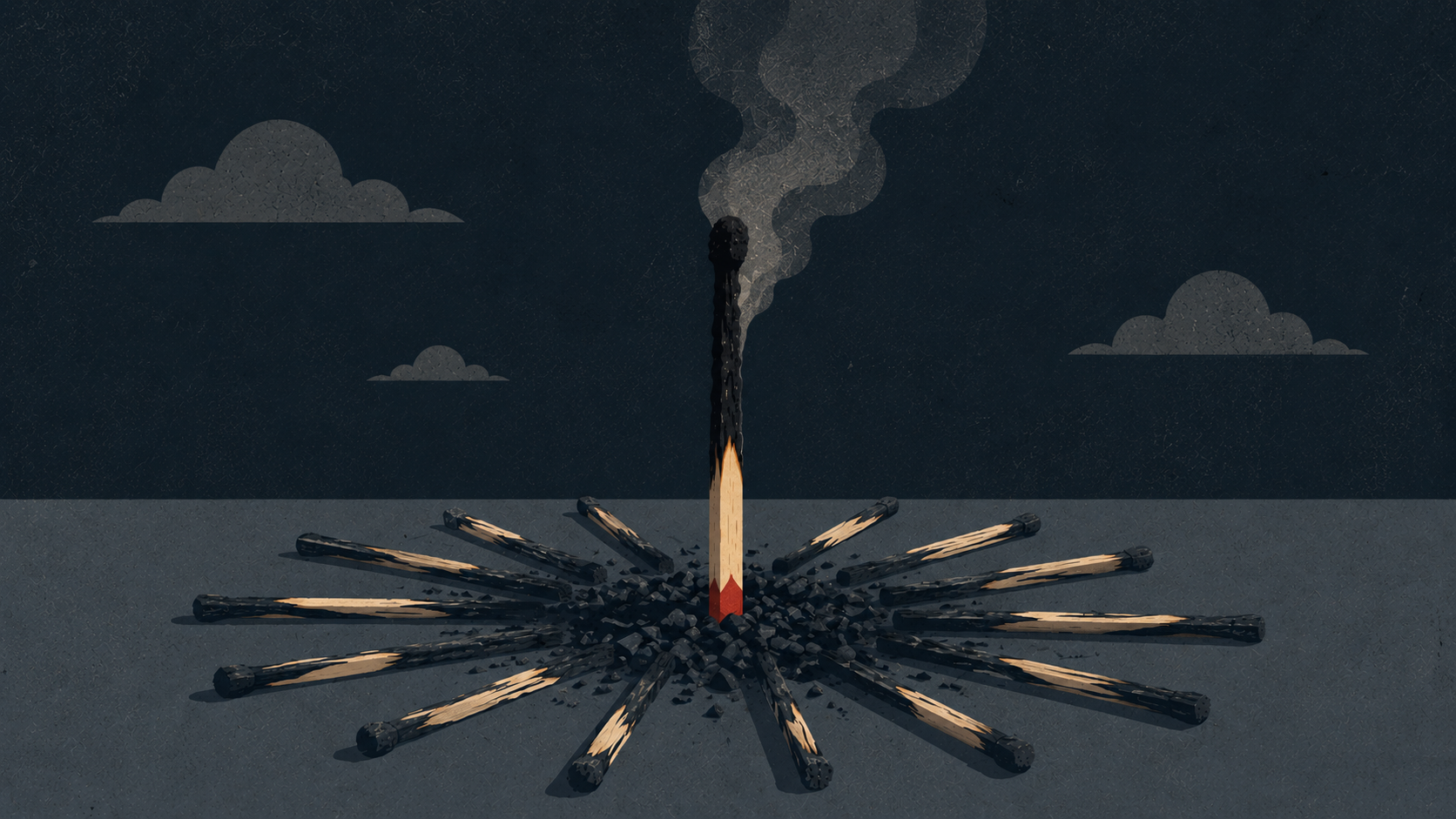
That’s the difference between being busy and being burned out. Busy work can still have limits, clear priorities, and a point where effort turns into completion. Burnout becomes more likely when the work never settles, when recovery or relief never seems to come, and when the person becomes responsible for holding together problems that the workplace system or culture refuses to fix.
Hard Work Still Needs Conditions

A difficult period at work isn’t automatically a sign that the job is unhealthy. People can handle demanding stretches when the work has shape around it: clear priorities, a reasonable sense of what matters most, tools that don’t make simple tasks harder, and enough authority to make decisions that match the responsibility they carry. Pressure becomes easier to tolerate when it’s tied to a real purpose, when people understand what tradeoffs are being made, and when the hard period is treated as something the workplace needs to recover from afterward.
A sustainable workplace doesn’t need to remove every hard week. It needs to make hard weeks recoverable. After a launch, a crisis, a busy season, or an urgent deadline, there should be some return to steadier work, clearer planning, or adjusted expectations. A high-pressure stretch is supposed to be a peak, not the new floor everyone has to stand on.
That distinction matters, because people often can rise to an intense moment. They can push through a difficult week, cover a gap, handle the emergency, calm the situation, and keep the work alive. The damage begins when the workplace treats that exceptional effort as proof that the same strain can continue.
The Conditions That Make Work Heavier
In practice, exhausting work often arrives through normal habits that seem manageable at first. Sometimes a team runs short on people, but the plan stays the same. Other times a role grows simply because someone proves reliable, and the old responsibilities never leave the plate. Or a person ends up owning an outcome while someone else still controls the deadline, the staffing, the tools, or the final decision.
“Yesterday’s emergency becomes today’s expectation, and the pace that’s supposed to be temporary becomes the new normal.”
Burnout can come from chronic workload and understaffing, when there is simply too much to do and not enough people to do it. It can come from unclear expectations, shifting priorities, and responsibility without control, when a person is held accountable for outcomes but cannot shape the conditions around them. It can also grow through constant messages, too many meetings, broken processes, weak management, and lack of recognition, where the work becomes harder not because of the task itself, but because of everything surrounding it. And it can build slowly, too, through job insecurity, repeated change, unfair treatment, difficult customers, or work that starts to feel pointless.
Those conditions don’t always show up as a dramatic crisis. They often arrive as extra effort hidden inside ordinary work. The employee ends up chasing missing information, explaining the same issue again, calming frustrated people, guessing what a decision actually means, fixing avoidable confusion, or making an unfinished plan look usable. The task itself may look simple from the outside, but the work built up around it keeps growing.
When the High Point Becomes the Baseline
The shift from a hard period to burnout-producing work often happens when temporary pressure becomes part of the role itself. A person may be hired to do one clear job, then gradually be expected to do more of that same job at a higher pace, while also taking on responsibilities that were not part of the original role. The volume increases, the role expands, and the old work stays on the plate. What begins as a temporary stretch becomes the new shape of the job.

A hard stretch can also start as an exception, and the person handles it well, maybe even at a high level. They keep the work moving, prevent visible failure, and make the pressure look manageable. Then the organization learns the wrong lesson: instead of treating that effort as a short-term push that needs recovery afterward, it treats the push as evidence of what the person can normally carry.
That’s how the baseline rises: yesterday’s emergency becomes today’s expectation, and the pace that’s supposed to be temporary becomes the new normal. When the next increase arrives, the person doesn’t start from the previous healthy level, they start from a level that’s already too close to the edge.
At that point, the employee is no longer responding to a temporary increase. Instead, the role itself becomes the place where unresolved problems collect. That’s when pressure stops being a passing condition and starts becoming the job.
The Gap That Produces Burnout
Burnout becomes easier to understand when the surface causes are treated as related conditions, not separate failures. Too much demand matters, but demand becomes more draining when the person also has too little control, too little clarity, too little support, and too little time to recover. The person is not only doing work; they’re constantly adjusting around missing decisions, weak tools, shifting priorities, and problems that return because nothing underneath them changes.
This is why burnout can show up in very different jobs. Someone might wear down simply from spending the whole day in meetings, answering messages, and switching between tasks without ever staying on one long enough to finish it. Someone else might face unfair rules, difficult customers, unclear expectations, or work that runs against their own standards. And then there’s the person who gets praised for being dependable, while gradually inheriting the hardest assignments, the least finished problems, and the most emotionally demanding conversations.
“The damage begins when the workplace treats that exceptional effort as proof that the same strain can continue.”
The common pattern is not the specific task. It’s the repeated gap between what the job demands and what the workplace provides. When that gap stays open long enough, the employee becomes the substitute for the missing structure. Their memory ends up carrying what documentation should hold, their follow-up substitutes for clear ownership, their patience makes up for planning that never gets done, and their ability to keep going becomes the only real limit on what the work can sustain.
That is why burnout can feel like a personal breaking point, even when many ordinary decisions build it over time. The person feels the strain in their body, mood, attention, and patience, while the workplace keeps spending their energy faster than it helps restore it.
How to Recognize the Pattern
The clearest warning sign is not always the amount of work. It’s whether the work has any place for pressure to go, other than into the person doing it. If everything is urgent, but no one can clearly say what matters most, the issue may be unclear priorities rather than individual stamina. And if a person is responsible for the result but can’t change the deadline, staffing, tools, or the decision that makes the work difficult, the issue may be lack of control rather than lack of effort.
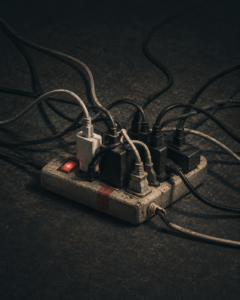
The pattern also appears when communication increases but clarity decreases. More meetings are scheduled, more messages are sent, and more updates are requested, but the problems don’t actually get smaller. Each conversation creates another question, another answer to chase, another adjustment to make, or another task to track. Instead of clearing the work, the communication adds new layers to it, and the employee ends the day with more to carry than they have when the day starts.
Another sign is the absence of recovery. A hard period can be manageable when it ends, but the strain changes when every finished push is followed by another urgent demand. The person may get through the week, then realize the next week already assumes they can do it again.
That’s why the exhaustion can sometimes feel confusing. The person may not be tired from volume alone — they may be tired from contradiction, repetition, unclear authority, and the effort it takes to keep work stable when the workplace doesn’t make it sustainable.
Exhaustion Is Not Always a Personal Failure
Burnout is felt inside one person, which makes it easy to mistake as an individual problem. The tired employee becomes the visible evidence, while the conditions that produce the exhaustion remain harder to see. A person may question their discipline, attitude, resilience, or boundaries before questioning why the work keeps requiring so much personal compensation.
But that doesn’t mean every difficult job is broken, or that every tired person is being failed by an organization. It means exhaustion deserves a wider reading when the same pressures keep returning. If workload grows without relief, decisions remain unclear, support doesn’t change conditions, and recovery keeps being postponed, the burnout isn’t appearing from nowhere — it’s being produced through the way the work is arranged.
The final mistake is treating the person as the problem because the exhaustion shows up in them first. Often, the person is simply where the pressure becomes visible, and where the unclear priorities, missing decisions, weak support, broken processes, and rising expectations finally become impossible to keep absorbing.
Burnout may be experienced individually, but in many workplaces, it’s created collectively, through demands the organization keeps making and support it doesn’t provide. The person may be the one who reaches the breaking point, but the pressure isn’t created by that person alone.