
The hardest part of doing excellent work is how rarely finishing feels like relief. The strong employee finishes an assignment that has already gone wrong, repairs work someone else leaves unfinished, or carries a difficult period that everyone promises will be temporary. For a moment, it seems like the workload might finally return to normal. Then another problem lands in the space they believe they have finally cleared.
Producing a strong result builds trust. Leadership learns that the strong employee can handle difficult work, make sense of unclear responsibilities, and keep important assignments from failing. That trust should improve the strong employee’s position. But inside the wrong environment, it mainly increases the number of problems the organization feels comfortable placing in their hands.
“Excellent work becomes a disadvantage when the organization accepts the result without fixing what made the extraordinary effort necessary.”
That imbalance becomes harder to ignore when less dependable employees seem to have lighter working lives. Their mistakes may lower expectations, while the strong employee’s success raises theirs. Managers may protect weaker employees from the hardest assignments because they aren’t trusted to handle them. So the strong employee’s reliability makes them the safest place to put every urgent, neglected, or complicated demand.
That can create a strange kind of resentment. The strong employee is proud of the work, but frustrated by what the work keeps producing. Every successful rescue confirms their ability while removing another reason for the organization to provide relief.
The Reward Excellent Work Deserves
Excellent work should leave the strong employee in a better position than before. The strong employee should gain greater influence over the work, stronger support, and a clearer path toward the next stage of their career. As great work builds trust and credibility, the strong employee should also receive more control, better opportunities, and assignments that grow in level and quality.

Doing strong work should also be recognized clearly. Private praise should name what the strong employee handles well, and public credit should make that contribution visible to others. Over time, recognition should become real through higher pay, a promotion, a stronger title, or access to opportunities that match the level at which the strong employee is already working. Praise matters most when the organization attaches something real to it.
The quality of future assignments should improve as well. The strong employee should gain more opportunities to make decisions, set direction, lead people, solve important problems, and improve how the work gets done. Meanwhile, repeated cleanup, preventable emergencies, unfinished work from others, and problems that keep returning because no one addresses their source should occupy less of the strong employee’s day.
An unusually demanding period should eventually give way to the normal conditions of the role. The extra duties, longer hours, and emergency pace tied to that specific project or crisis should recede once the immediate need has passed, allowing the workload to return to a sustainable level. Similar demands may arise again, but they should remain temporary exceptions rather than become permanent features of the job. That strain should show where the organization needs more staffing, clearer ownership, or stronger support. It should also make the strong employee’s extra effort visible and lead the organization to put better support in place before the next demanding period begins.
Excellent Work Becomes the Default Fix
Excellent work becomes a disadvantage when the organization accepts the result without fixing what made the extraordinary effort necessary. A strong employee can take a disorganized team, a failing assignment, or an unclear process and pull it into working order. They correct mistakes, fill gaps, make decisions others avoid, and keep the work moving until it is complete. By then, the original disorder may no longer be visible because one person has absorbed everything required to make the result appear normal.
That success can hide how severe the problem really is. Leadership sees completed work without always seeing the extra time, repeated corrections, difficult conversations, and constant attention that make completion possible. The organization feels less pressure to improve staffing, clarify responsibility, strengthen training, or deal with employees who aren’t doing the work well.
“Doing the work well stops expanding the strong employee’s future and starts preserving the organization’s access to what the strong employee already produces.”
The strong employee may know how close the work comes to failing, yet everyone around them sees only a completed result. That gap in perception can be exhausting. The strong employee feels the strain of what almost goes wrong, while the organization remembers only that the work gets done.
Soon, the strong employee is doing more than their own work. They review weak output, finish what weak employees leave incomplete, repair missed deadlines, and explain problems they don’t create. Their effort can make weak work appear acceptable. Weak employees may then receive fewer difficult assignments, while the strong employee carries their own share and part of everyone else’s.
This uneven division of work also affects how visible each person becomes for future opportunities. The strong employee remains buried in production, correction, and emergency work, while other employees may have more time to build relationships, join higher-level discussions, and show planning or communication skills to the people who influence promotions.
Excellence Starts Narrowing the Future
The shift happens when the organization stops treating the strong employee’s extra effort as temporary and starts planning around it. Work that requires extraordinary effort at first eventually becomes the baseline for what the organization considers acceptable from that employee. The workload no longer returns to a normal level before another difficult demand arrives.

Temporary coverage turns into an ongoing responsibility, and an emergency assignment turns into permanent ownership. Work continues entering the role while very little leaves it. The strong employee’s demonstrated maximum gradually becomes the amount everyone assumes they can provide every day.
This changes how the strong employee experiences ordinary work. A difficult week no longer feels temporary, because the next one begins at the same intensity. Completing more does not create room. Instead, it only raises the amount the strong employee is expected to complete again.
A formal promotion can make the shift especially clear. The strong employee may gain responsibility for leadership, planning, hiring, developing other employees, or wider business decisions, while continuing to do nearly all the hands-on work from the previous role. The title may improve, but the old job remains underneath the new one.
Real advancement changes the nature of the work. Some previous duties get reduced or transferred, so the strong employee can spend more time making decisions, leading others, planning ahead, and solving more complex problems. A promotion that simply adds those responsibilities expands the workload without creating meaningful movement.
The same restriction can happen without a promotion, too. A strong employee may seek a transfer or a different kind of work, only to find that the organization depends too heavily on what they’re already producing. Their excellence makes them more useful right where they are, so moving them becomes inconvenient. This is the turning point. Doing the work well stops expanding the strong employee’s future and starts preserving the organization’s access to what the strong employee already produces.
The Cycle Takes Hold
The pattern behind these experiences can now be stated plainly. Excellence becomes a liability when a strong employee repeatedly solves difficult problems and the organization responds by increasing its dependence on that employee without fixing the conditions that made the extraordinary effort necessary. A difficult or neglected problem reaches the strong employee, who solves it through skill, resourcefulness, effort, or extra time. That prevents immediate failure, which reduces the urgency to add staff, improve the process, clarify ownership, or deal with poor work from other employees.
Trust in the strong employee increases. So the organization places more problems in their hands while the staffing, ownership, process, or work-quality issues behind those problems remain unresolved. Each success strengthens the organization’s belief that the current arrangement works.
“The strong employee’s demonstrated maximum gradually becomes the amount everyone assumes they can provide every day.”
The effects spread in several directions. Work piles up first, as new responsibilities keep attaching to the strong employee while very little leaves their workload. Problems start to concentrate as well, since the most reliable person naturally becomes the default landing spot for anything unstable or unclear. That combination eventually narrows career movement, because removing the strong employee from their current work would expose exactly how much the organization depends on them.
The strong employee’s exposure also grows, as they become connected to more assignments, coworkers, and outcomes. That wider connection increases the number of failures they may be expected to prevent, repair, or explain, even when they lack control over the conditions creating those failures. Some days, the strong employee ends up responsible for problems created far beyond their actual authority.
The cycle may begin through convenience, poor planning, cost avoidance, delayed action on an employee who isn’t keeping up, or fear of disrupting current output. Managers may also interpret the strong employee’s efficiency as proof that they have room to take on more work. The outcome can become exploitative without starting out as a deliberate plan. The organization keeps benefiting from that exceptional effort, while growing less likely to make the changes that would keep it from being necessary.
Two Kinds of Repeated Responsibility
Added responsibility can reflect healthy trust, career development, and preparation for greater opportunity. Or it can show that an organization has started depending on a strong employee to absorb problems it isn’t fixing. That difference rarely shows up in one difficult assignment, or even two. It becomes clear through what keeps changing and what keeps failing to change over time.
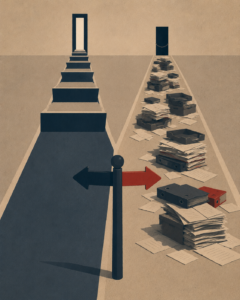
Healthy development gradually improves the strong employee’s position. Higher-level responsibilities arrive as some previous duties get reduced, transferred, or removed. Authority, support, pay, and access to important decisions all grow with the role. Difficult periods eventually end, and temporary assignments come with a clear purpose.
Accumulated dependence moves in a different direction. New work keeps arriving while old work never really leaves, until urgent periods start to feel like the normal pace instead of the exception. Being efficient only produces more assignments, and responsibility keeps growing while authority, support, and control over priorities fail to keep up.
The type of difficulty provides another clue. Healthy challenges introduce harder decisions, broader responsibilities, and skills that prepare the strong employee for future work. Accumulated dependence brings larger amounts of the same cleanup, correction, coordination, and emergency coverage. One expands the strong employee’s abilities and options, while the other repeatedly spends the abilities they already have.
The organization’s response to recurring problems also matters. Healthy trust leads to stronger staffing, clearer ownership, better processes, or coworkers who grow more independent over time. Dependence leaves those conditions unchanged, because the strong employee keeps preventing them from turning into visible failure.
Career movement offers the clearest evidence. Training and development get repeatedly postponed because the current work feels too important to pause. And a promotion, when it comes, preserves nearly all of the former role while adding new responsibilities on top of it. Being indispensable becomes the reason responsibilities cannot be transferred or a new opportunity cannot be pursued.
A single difficult period doesn’t establish the pattern on its own. The warning sign appears when trust repeatedly increases the strong employee’s obligations while steadily narrowing their choices. Over time, the strong employee may come to realize that every new sign of confidence from the organization has made the role heavier without making the future any larger.
Value Includes Protection
Praise, trust, and being seen as indispensable can all sound like proof that a strong employee is valued. Yet those things do not necessarily improve the strong employee’s actual position. A person can be appreciated and still remain overloaded, under-supported, and unable to move forward.
That contradiction is part of what makes the pattern difficult to reconcile. The strong employee may be told how important they are, while watching opportunities to grow disappear, requests for support stall, and difficult work return to them again and again. Appreciation shows up in the words, while the daily experience keeps getting harder.
Being genuinely valued includes being protected. The organization protects the strong employee’s ability to grow by shifting work away from them as responsibilities expand, and protects their future by creating opportunities that aren’t constantly pushed aside by the next emergency. It also protects the work itself, adding staffing, clearer ownership, and reliable backup, instead of building success around one person’s willingness to keep absorbing the strain.
Difficult work, mentoring, leadership, and greater responsibility can all strengthen a career. They can build skill, influence, and preparation for work at a higher level. What they actually mean depends on whether they expand the strong employee’s future or mainly preserve the organization’s current access to their labor.
Excellence itself is not the liability. The liability shows up when the organization treats competence as something it can repeatedly spend, without restoring a sustainable workload, protecting the strong employee’s future, or changing the conditions that keep consuming their effort.